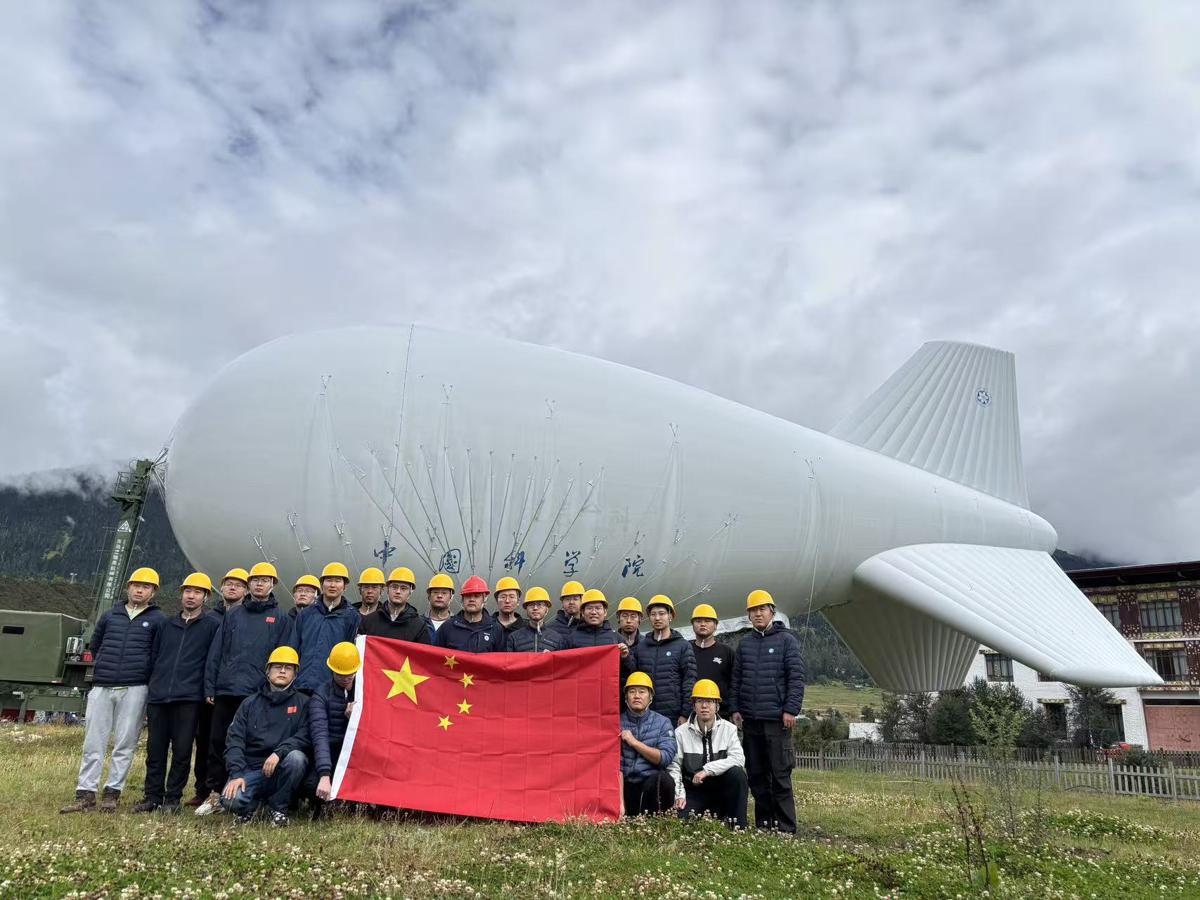
The second comprehensive scientific expedition to the Qinghai-Tibet Plateau successfully conducted the Jimu 1 tethered balloon atmospheric observation experiment in Lunang town, Nyingchi, Xizang autonomous region.
The tethered balloon, which carried 16 types of scientific payloads across three major categories weighing about 200 kilograms, ascended to 5,500 meters above sea level. Through coordinated multi-payload observations, the experiment marked a technological leap from single-point sampling to three-dimensional monitoring.
Zhang Taihua, a senior engineer at the Aerospace Information Research Institute (AIR) of the Chinese Academy of Sciences, said the experiment accurately obtained critical scientific data, including atmospheric components, pollutant distribution, and three-dimensional cloud microphysical parameters.
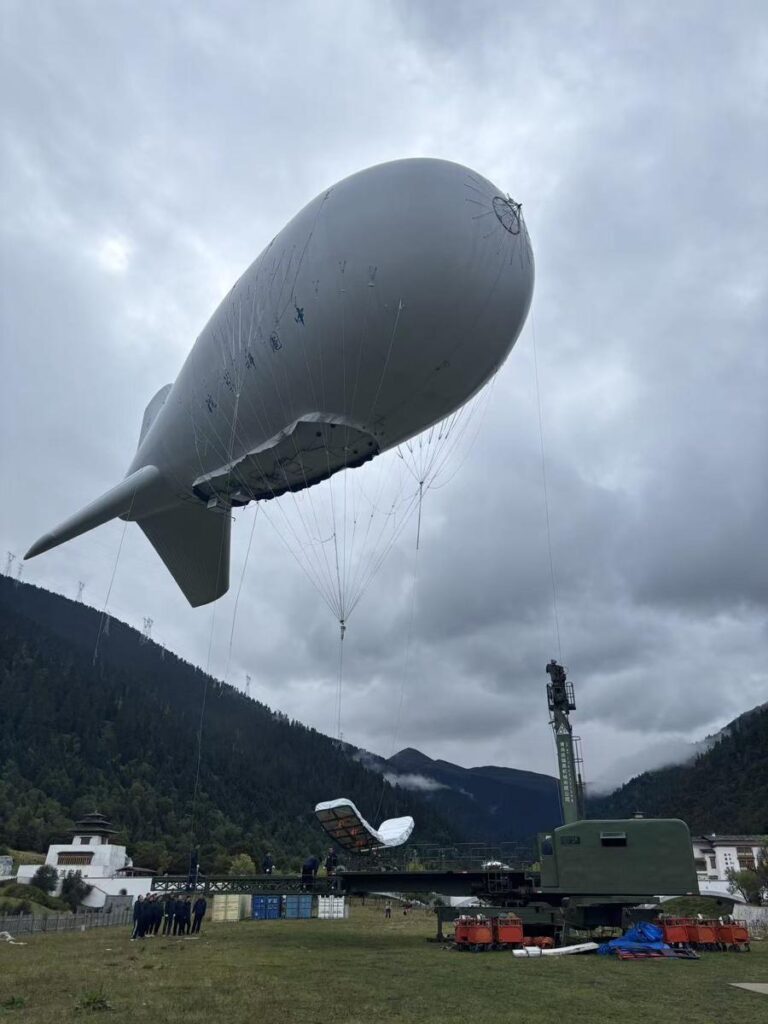
“This experiment, with its diverse payloads and rich data, will provide core data support for research on the Qinghai-Tibet Plateau, aiding in the in-depth analysis of climate and environmental changes on the plateau,” said Zhang.
“It also lays the foundation for dynamic monitoring and sustainable development in the Qinghai-Tibet Plateau and other global climate change-sensitive areas.”
Since 2017, the aerostat has been deeply involved in the scientific expedition, conducting systematic observations in core areas, such as Nyingchi, Namtso Lake, Mount Qomolangma or Mount Everest in the West, and Tsonyi county within the Xizang autonomous region, the Hoh Xil area in the Qinghai province, and Tashkurgan area in the Xinjiang Uygur autonomous region.
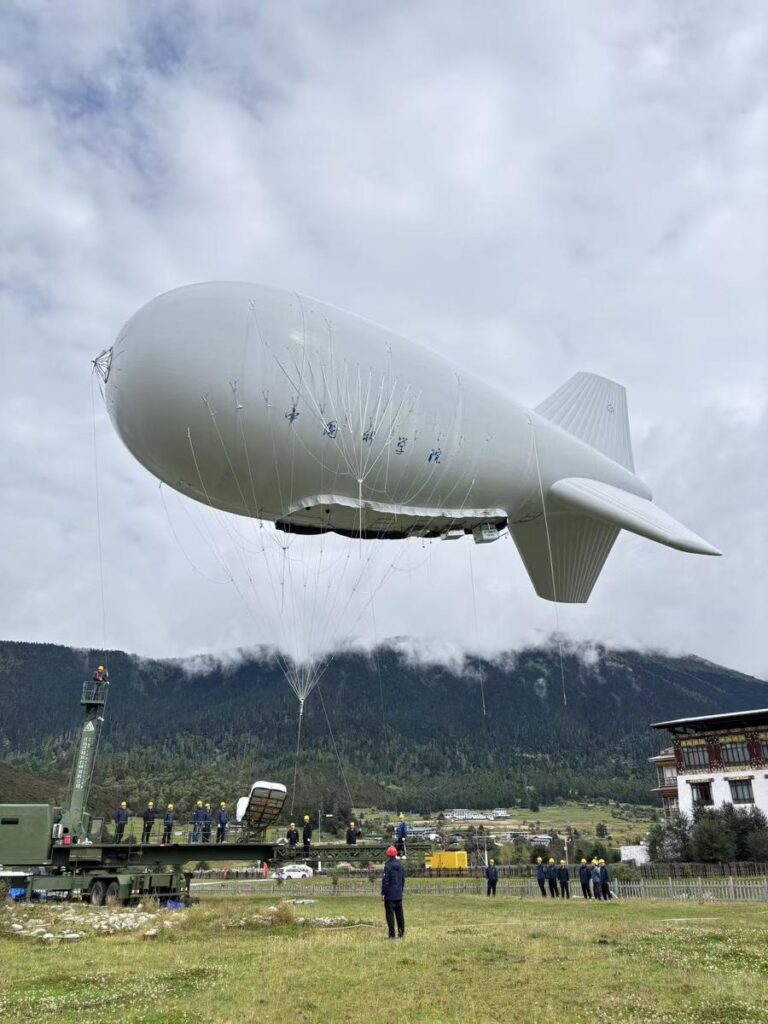
During the 2022 expedition, Jimu 1 set a world record by ascending to 9,050 meters, surpassing Mount Qomolangma’s height.
In the past few weeks, from August to Sept 19, the experiment completed 30 flight verifications across different altitudes and meteorological conditions, providing substantial empirical evidence for subsequent technological optimization.
He Zeqing, senior engineer at AIR, said an aerostat is an aircraft that generates buoyancy by filling its interior with a gas (usually helium) that is less dense than air. Aerostat predate airplanes and are considered an ancient type of aerospace vehicle.
“As a significant category of aerostat, aerostat or tethered balloons boast unparalleled competitive advantages in many application scenarios due to their long endurance, wide coverage, flexible deployment, strong load capacity, and low operational cost,” said He Zeqing.
“Therefore, they become the core platform for constructing an integrated ‘sky-earth’ observation system. The Jimu 1 tethered balloon has emerged as a benchmark product, reflecting the level of independent innovation in China’s airship observation field,” he added.
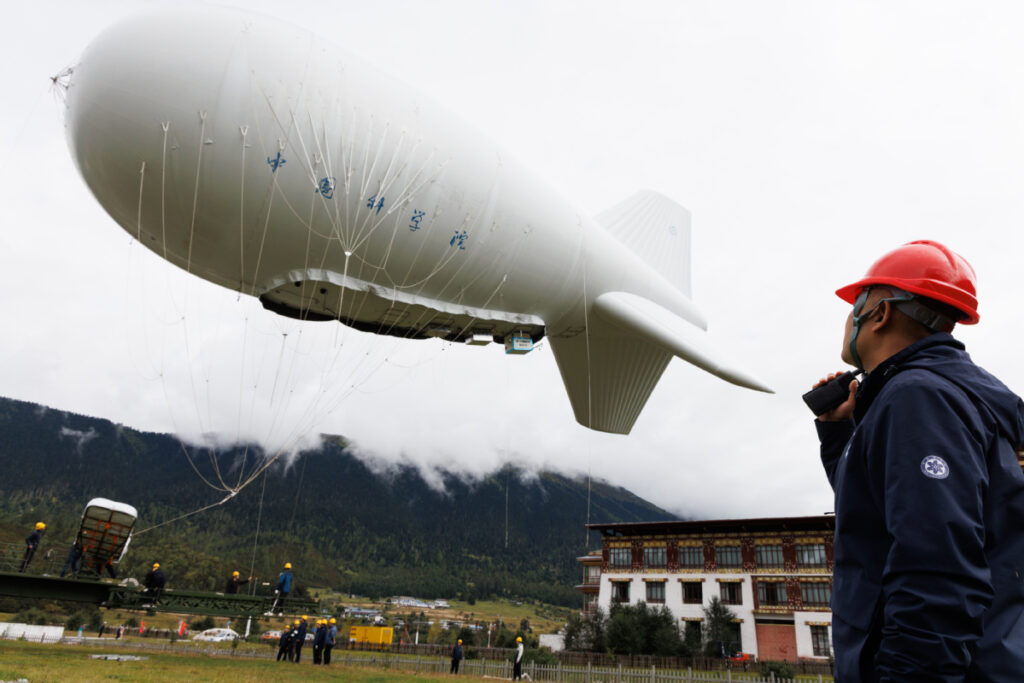
The Jimu 1 tethered balloon ascends in Lulang, Nyingchi, Southwest China’s Xizang autonomous region, Sept 18, 2025.
Read more By Palden Nyima and Daqiong in Lhasa | chinadaily.com.cn |